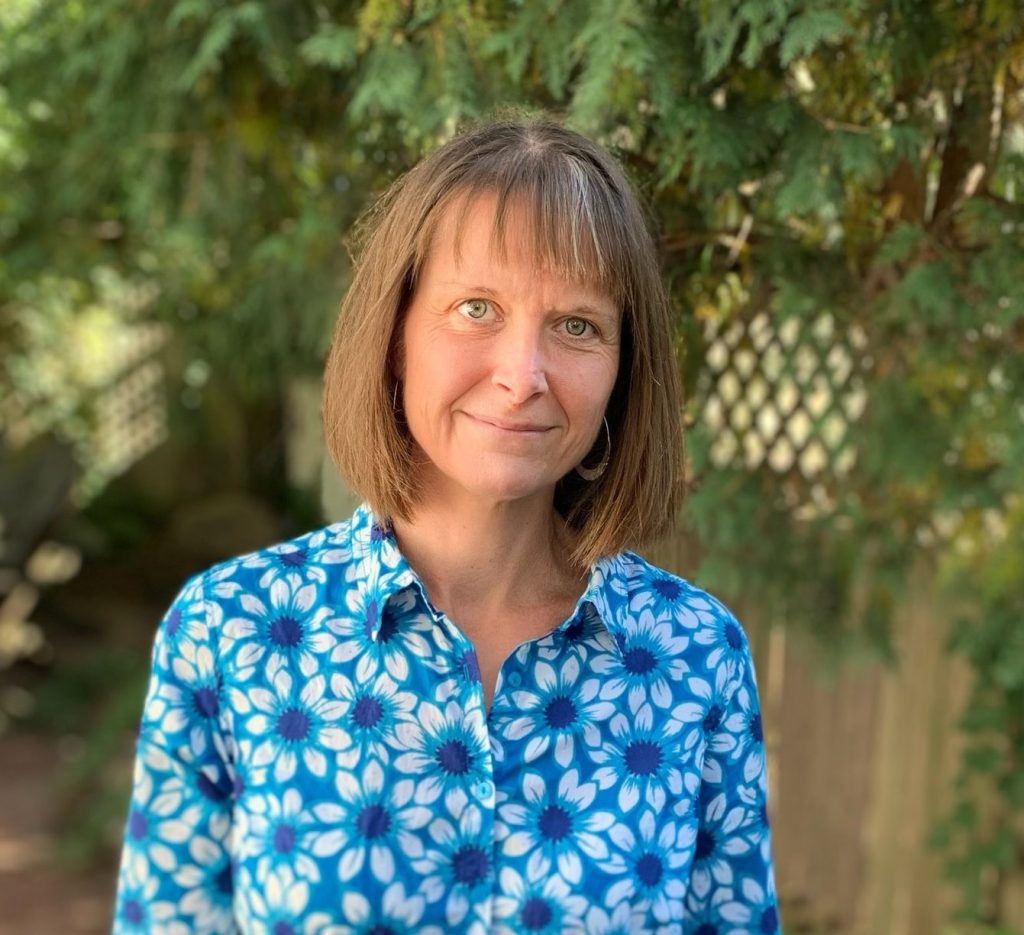
Anne Radday
Research Program Manager
Working with Feinstein since 2015
Based in Somerville, MA
Anne Radday is the Feinstein International Center’s focal point for research communications and uptake and knowledge management. She is dedicated to ensuring that the Center’s evidence and learning effectively informs decision-making at the local, national, regional, and international levels. Working closely with researchers, partners, and key stakeholders, she develops and executes context-specific research uptake strategies for the Center’s large scale research projects. Through this work, she tests and develops new frameworks for knowledge management, which guide the Center’s strategy.
Anne has significant experience in marketing and communications, knowledge management, knowledge product development, organizational strategy, and external relations. Prior to joining Feinstein, she was a senior consultant at Root Cause where she led projects that enabled hundreds of nonprofits and foundations to understand and improve the effectiveness of their programs and organizational infrastructures. She has also worked as a research assistant at the UN Population Fund and served as a Peace Corps Volunteer in Niger, West Africa. Anne holds a B.A. in political science, magna cum laude, from Columbia University and an M.P.A. from International Christian University in Tokyo, where she was a Rotary World Peace Fellow.
RESEARCH INTERESTS
REGIONAL FOCUS
COURSES TAUGHT
MOST CITED BOOKS & ARTICLES
MOST RECENT EXTERNAL PUBLICATIONS
NEWS STORIES
The Feinstein International Center has been working with academic colleagues in Sudan since it began working in the country more than 20 years ago. However, developing partnerships at the institutional…
In January 2022, the research teams from the Universities of Al Fashir (North Darfur, Sudan) and Zalingei (Central Darfur, Sudan) hosted events at their universities. The research teams shared their…
Feinstein International Center faculty and researchers published three articles in May issue of the Field Exchange. Click here to download the full issue. Merry Fitzpatrick et al’s article, “Kwashiorkor –…
In 2020 the SEADS Project systematically reviewed the impact of agriculture interventions in humanitarian crises, focusing on impacts on livelihoods, food security, and nutrition. The review covered all of the…
Andy Catley, Racey Henderson, and Anne Radday published a SEADS Learning Brief titled, “Emergency Agriculture Interventions: Reviewing Evidence on the Impacts on Livelihoods, Food Security, and Nutrition,” which systematically reviews…
Famine, COVID-19, and the Politics of Information and Analysis by: Anne Radday, Peter Hailey, and Daniel Maxwell “In war, truth is the first casualty.” Aeschylus Greek tragic dramatist (525 BC…
Anastasia Marshak, Helen Young, Anne Radday, and Elena Naumova published a study in the International Journal of Environmental Research and Public Health (IJERPH) as part of the special issue, “Early…
Anastasia Marshak, Helen Young, Anne Radday, and Elena Naumova had their paper, “Sensitivity of Nutrition Indicators to Measure the impact of a Multi-Sectoral Intervention: Cross-Sectional Household, and Individual Level Analysis,”…
The University of Al Fashir in North Darfur, Sudan hosted two workshops in February 2020. The workshops informed individuals and organizations who support natural resources management in the rural areas…
In October 2019, Musa Ismail (University of Zalingei), Abubakr Siam (University of Al Fashir), and Anne Radday were recorded by the US Embassy in Khartoum discussing the partnership between Tufts,…
On August 27, 2019, the Jordan Times covered our report “Citizens of Somewhere” about refugees in Amman, Jordan. Allyson Hawkins, Ruby Assad, and Denis Sullivan wrote the report as part…
Helen Young and Anne Radday led a two day workshop for the Sudanese Humanitarian Aid Commission (HAC) department heads on February 6 and 7, 2019. The workshop used Feinstein research…
Helen Young, Hussein Sulieman, and Anne Radday share early learning about different uses of livestock to improve resilience from their livestock tracking study in West Darfur, Sudan. In West Darfur,…
Anne Radday and Jeeyon Janet Kim presented on Feinstein research and methodologies at the Resilience Measurement Evidence and Learning Conference in New Orleans on November 13, 2018. As part of the panel…
Helen Young and Anne Radday represented Tufts at the Sudanese-American Collaboration Forum on Higher Education and Scientific Research. Delegates explored ways to promote partnerships between American and Sudanese universities. Helen…
Anne Radday, Hussein Sulieman, and Helen Young describe the importance of their livestock tracking study in West Darfur, Sudan as the study gets underway. The Building Resilience in Chad and…
Anne Radday teamed up with David Traynor of Concern Worldwide to blog about how Concern’s team in Chad used Feinstein research to work with local communities to better understand and…
In February 2018, the Building Resilience and Adaptation to Climate Extremes and Disasters (BRACED) program held its Annual Learning Event for the 13 consortia funded by UKAID’s £140 million, three…
Anne Radday and Helen Young describe specific ways that researchers can conduct their research to help it resonate with decision makers in a blog post for the Building Resilience and…
In their March 7, 2017 blog post on the Building Resilience and Adaptation to Climate Extremes and Disasters (BRACED) website, Helen Young and Anne Radday call on BRACED to increase…
In its February 2017 issue, the Field Exchange presents research findings from a study conducted in Chad by Anastasia Marshak, Helen Young, and Anne Radday. The study was a randomized…
The first ever World Humanitarian Summit took place in Istanbul, Turkey on May 23-24, 2016. The summit aimed to set a forward-looking agenda for humanitarian action that addresses future humanitarian…
Feinstein’s Anne Radday posted an article reflecting on the question, “how can we collect high quality data on climate resilience?” on the Building Resilience and Adaptation to Climate Extremes and…
FEINSTEIN PUBLICATIONS
This report outlines an anticipatory insurance product designed to support farmers in the drought-prone regions of Malawi and Zambia.
This report explores the seasonal patterns of acute malnutrition and its key drivers in the Goz Beida Region of Chad.
This report describes findings from a preliminary stakeholder survey on perceptions of malnutrition in northern Kenya.
Ce document présente les motifs de la saisonnalité de la malnutrition aiguë et les différences des motifs et les facteurs pour les filles et les garçons dans le zone Goz Beida dans l’est du Chad.
Ce document présente les motifs de la saisonnalité de la malnutrition aiguë et les différences des motifs et les facteurs pour les filles et les garçons dans le zone Goz…
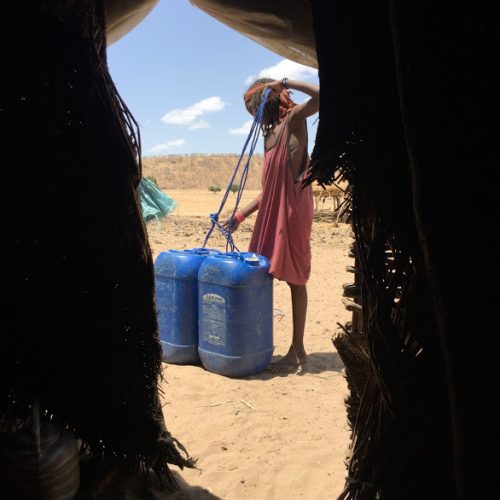
This brief summarizes the seasonal patterns of acute malnutrition and differences in seasonal patterns and possible drivers for boys and girls in the Goz Beida Region of eastern Chad.
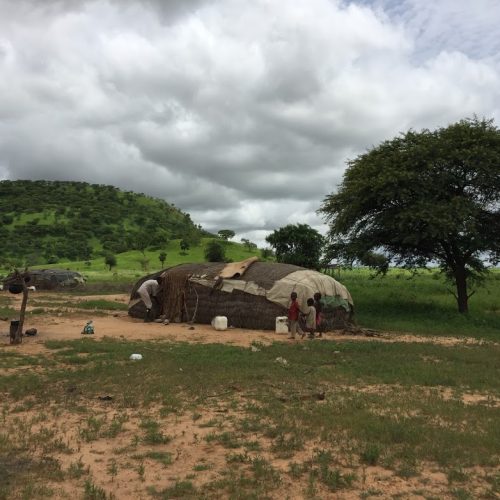
This brief summarizes the seasonal patterns of acute malnutrition and its key drivers in the Goz Beida Region of Chad.
This field report provides an up to date information about the issues affecting the relationships between different users of natural resources within the changing context of Darfur.
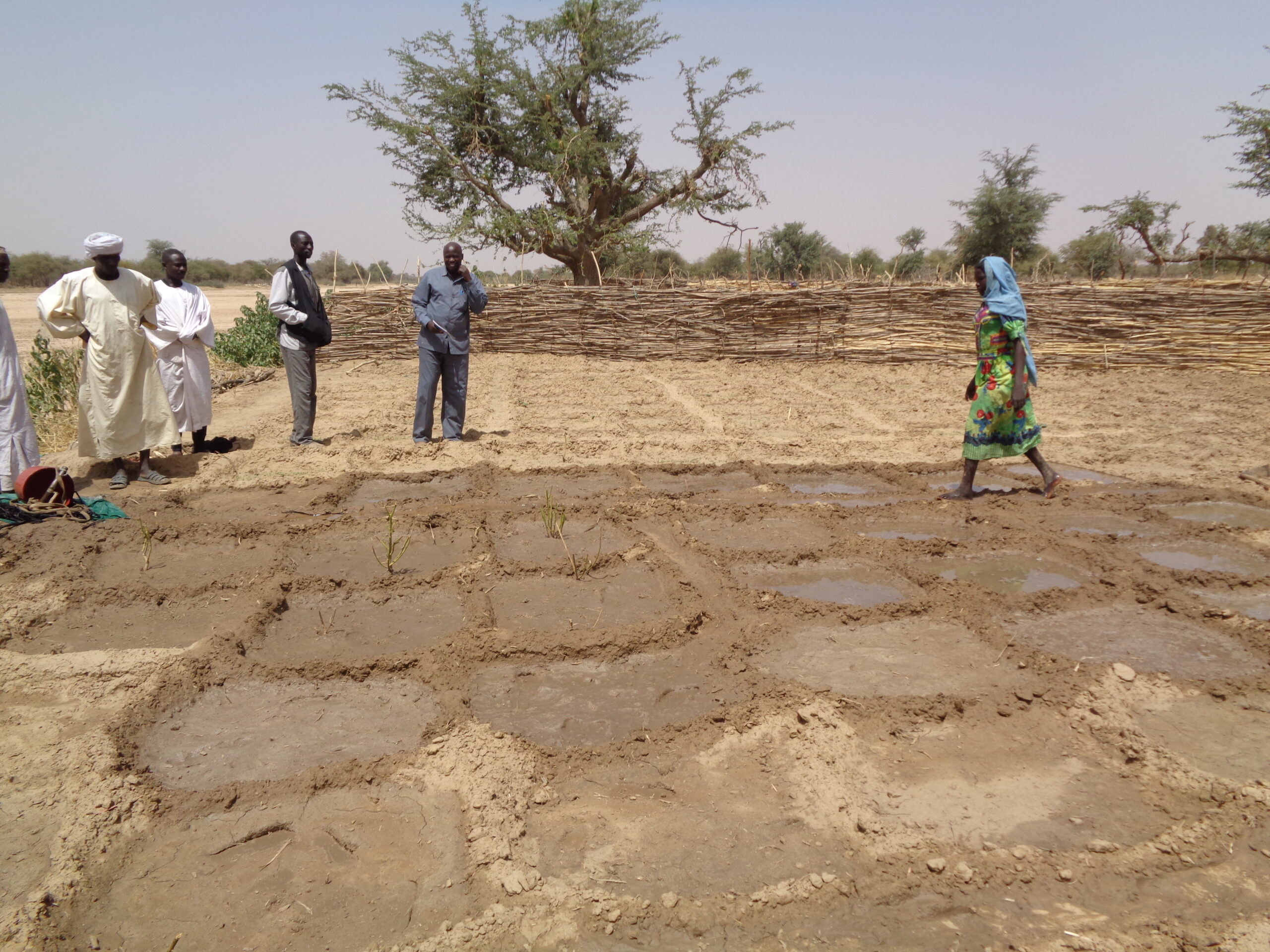
This brief reviews farming and pastoralist livelihood systems to highlight their evolving and overlapping tenure regimes. The learning brief series aims to promote awareness and understanding of natural resource use and management in Darfur to support the Taadoud II program and wider programs and policies to effectively build resilient livelihoods.
This brief in Arabic reviews farming and pastoralist livelihood systems to highlight their evolving and overlapping tenure regimes. The learning brief series aims to promote awareness and understanding of natural resource use and management in Darfur to support the Taadoud II program and wider programs and policies to effectively build resilient livelihoods.
This brief lays out lessons from our study of famine information systems and considers how they may be applicable to the coronavirus pandemic response.
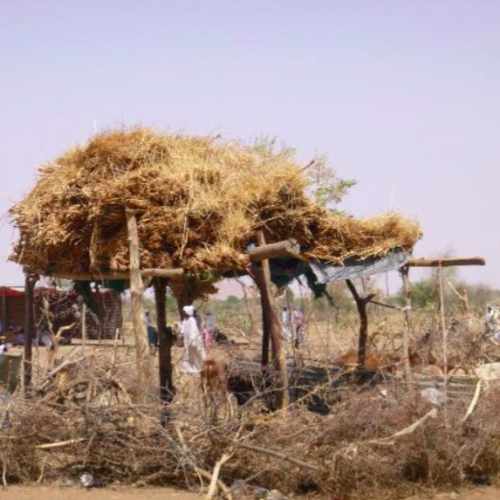
This publication presents a literature review activities in covering topics related to the natural environment and natural resource management in the Darfur region. This desk review serves as a foundation and reference for the NRM field studies and series of briefs, as part of the Taadoud II program, as well as supporting the development of training materials.
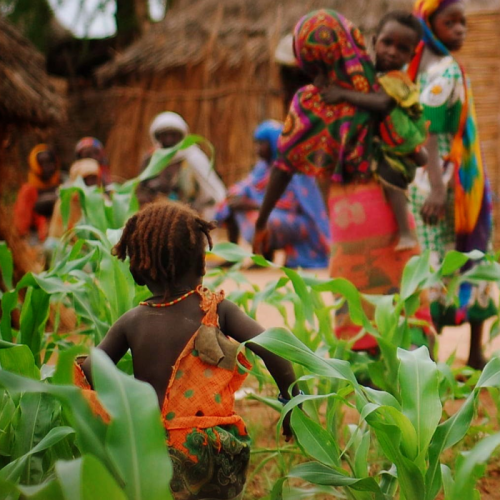
This report describes the results of an impact assessment on Concern Worldwide’s program in eastern Chad aimed at reducing malnutrition.
This is the French version of the report, Water, Livestock, and Malnutrition: Findings from an Impact Assessment.
FEINSTEIN RESEARCH PROJECTS
This project includes studies on early warning and assessment of crises, specifically looking at real-time monitoring, anticipatory action, political constraints, data collection and analysis, and the validity of indicators.
USAID Nawiri is an evidence-based development project to address acute malnutrition in northern Kenya. Catholic Relief Services leads a consortium in Isiolo and Marsabit counties, and Feinstein provides research and capacity-building support.
The Taadoud operational research aims to strengthen the impact of resilience-related actions and interventions.
This study seeks to understand the availability and quality of information, and the external influences on data collection and analysis for the classification of food emergencies.
This study is a partnership with Concern Worldwide that aims to inform programming around water, livestock, and nutrition in the Goz Beida area. It investigates the seasonal patterns of acute malnutrition and its key drivers in the Goz Beida Region.
The One Nutrition in Complex Environments (ONCE) study tests a new way of preventing and addressing acute malnutrition through a cluster-randomized trial.
This project collects and commissions case studies of urban settings (towns, cities or sub-areas of cities) in which refugees or internally displaced people have been living for more than two years.
Building Resilience and Adaptation to Climate Extremes and Disasters (BRACED), is a £140m project designed to improve the resilience of the most poor to climate extremes and shocks.
From 2005 to 2017, we developed a wide-ranging research portfolio on livelihoods systems under stress throughout the Greater Horn of Africa and beyond. This project synthesizes key themes of that research.
The Feinstein Center partnered with Concern Worldwide to (1) rigorously test the impact of the CRAM model on community resilience to shocks and (2) to explore how remote sensing data can provide accurate information to make early warning predictions in the Sila region of Chad.