Andy Catley directs Feinstein’s Policy and Process Research Program. He leads national and regional programs that combine evidence-based analysis with the facilitation of policy reform and improved programming. He is the Principal Investigator on the Agriculture Knowledge, Learning, Documentation and Policy project in Ethiopia, and the Karamoja Resilience Support Unit in Uganda. His current interests focus on processes of rural transformation and related policy and programming options, especially in areas affected by recurrent humanitarian crises. From 2006 to 2015, Andy also led Feinstein’s support to the global Livestock Emergency Guidelines and Standards (LEGS), and chaired the LEGS Steering Committee during this period. LEGS is a companion module to the Sphere Handbook.
Andy’s previous work at Tufts includes work the African Union and African regional organizations to develop new policies on pastoralist areas development and food security, notably the AU Policy Framework for Pastoralism in Africa. In 2005, Andy opened the Tufts University Africa Regional Office in Ethiopia, and directed the office until 2011. As a veterinarian and epidemiologist, Andy also worked extensively on livestock and veterinary issues in Africa, including the validation of participatory epidemiology in disease investigation and surveillance in resource-poor areas. He lived and worked in Somaliland, Eritrea, Ethiopia, and Kenya for 17 years.
Andy holds a degree in veterinary medicine from the University of London, a master’s degree in tropical veterinary science from the University of Edinburgh, and a Ph.D. in epidemiology, also from the University of Edinburgh. He was made a European Specialist in Population Medicine in 2005, and is a de facto Diplomat of the European College of Veterinary Public Health.
RESEARCH INTERESTS
- Rural transformation, especially in areas affected by recurrent humanitarian crises.
- Evidence-based approaches in difficult operational contexts.
COURSES TAUGHT
SELECTED JOURNAL AND BOOK PUBLICATIONS
- Catley, A., Alders, R. G., & Wood, J. L. (2011). Participatory epidemiology: Approaches, methods, experiences. The Veterinary Journal, 191(2), 151–160. https://doi.org/10.1016/j.tvjl.2011.03.010
- Catley, A., Lind, J., & Scoones, I. (2013). Pastoralism and development in Africa. Routledge. https://doi.org/10.4324/9780203105979
- Rufael, T., Catley, A., Bogale, A., Sahle, M., & Shiferaw, Y. (2007). Foot and mouth disease in the Borana pastoral system, southern Ethiopia and implications for livelihoods and international trade. Tropical Animal Health and Production, 40(1), 29–38. https://doi.org/10.1007/s11250-007-9049-6
- Barasa, M., Catley, A., Machuchu, D., Laqua, H., Puot, E., Kot, D. T., & Ikiror, D. (2008). Foot-and-Mouth disease vaccination in South Sudan: Benefit-Cost analysis and livelihoods impact. Transboundary and Emerging Diseases, 55(8), 339–351. https://doi.org/10.1111/j.1865-1682.2008.01042.x
- Catley, A. (2006). Use of participatory epidemiology to compare the clinical veterinary knowledge of pastoralists and veterinarians in East Africa. Tropical Animal Health and Production, 38(3), 171–184. https://doi.org/10.1007/s11250-006-4365-9
MOST RECENT EXTERNAL PUBLICATIONS
- Catley, A., Arasio, R. L., & Hopkins, C. (2023). Using participatory epidemiology to investigate women’s knowledge on the seasonality and causes of acute malnutrition in Karamoja, Uganda. Pastoralism, 13(1). https://doi.org/10.1186/s13570-023-00269-5
- Catley, A., Stites, E., Ayele, M., & Arasio, R. L. (2021b). Introducing pathways to resilience in the Karamoja Cluster. Pastoralism, 11(1). https://doi.org/10.1186/s13570-021-00214-4
- Catley, A., & Ayele, M. (2021). Applying livestock thresholds to examine poverty in Karamoja. Pastoralism, 11(1). https://doi.org/10.1186/s13570-020-00181-2
- Alders, R. G., Ali, S. N., Ameri, A. A., Bagnol, B., Cooper, T. L., Gozali, A., Hidayat, M. M., Rukambile, E., Wong, J. T., & Catley, A. (2020). Participatory Epidemiology: principles, practice, utility, and lessons learnt. Frontiers in Veterinary Science, 7. https://doi.org/10.3389/fvets.2020.532763
- Catley, A. (2020). Participatory epidemiology: Reviewing experiences with contexts and actions. Preventive Veterinary Medicine, 180, 105026. https://doi.org/10.1016/j.prevetmed.2020.105026
NEWS STORIES
Pastoralism and Development in Africa: Dynamic Change at the Margins (eds. Andy Catley, Jeremy Lind, Ian Scoones) is now available open access, ten years after it was originally published in…
In November 2021, Pastoralism released with a special section of articles coming out of the Karamoja Resilience Support Unit’s 2019 conference “Pathways to Resilience in the Karamoja Cluster.” It includes…
In 2020 the SEADS Project systematically reviewed the impact of agriculture interventions in humanitarian crises, focusing on impacts on livelihoods, food security, and nutrition. The review covered all of the…
Andy Catley, Racey Henderson, and Anne Radday published a SEADS Learning Brief titled, “Emergency Agriculture Interventions: Reviewing Evidence on the Impacts on Livelihoods, Food Security, and Nutrition,” which systematically reviews…
The Karamoja Resilience Support Unit (KRSU) in Uganda hosted a three-day international Karamoja Cluster Conference to take stock of recent research in Karamoja, northwest Kenya, and neighboring areas of South…
The USAID/Ethiopia Agriculture Knowledge, Learning, Documentation and Policy (AKLDP) project, as part of the Feed the Future portfolio in Ethiopia, was tasked with helping USAID, its Implementing Partners, and the…
A Feinstein team including Helen Young, Andy Catley, Elizabeth Stites, and Anastasia Marshak held a one day workshop with the Food and Agriculture Organization of the United Nations (FAO) in…
The Karamoja Resilience Support Unit (KRSU) partnered with International Institute for Environment and Development (IIED) to conduct a five day (19-23rd March 2018) training of trainers’ (TOT) course on Pastoralism…
The Karamoja Resilience Support Unit (KRSU) recently released a six minute video clip portraying the livestock market dynamics and presenting the perspectives of herders, buyers, brokers, and other service providers…
In a recent blog post, Ian Scoones discusses Andy Catley’s recent report, “Pathways to Resilience in Pastoral Areas: A Synthesis of Research in the Horn of Africa.” The post explores…
The Agriculture Knowledge, Learning, Documentation and Policy Project (AKLDP) has been awarded $730,000 by USAID Ethiopia to continue its work providing collaborative learning and coordination support across the USAID Feed…
Andy Catley recently talked to Tufts Now about how better planning and improved funding have helped Ethiopia deal with debilitating drought. As Ethiopia struggles to recover from its worst drought…
The Agriculture Knowledge, Learning, Documentation and Policy Project (AKLDP) released Field Notes that summarize how farmers describe the devastating impacts of the current drought in northern Ethiopia. The notes describe…
FEINSTEIN PUBLICATIONS
This primer on pastoralism in Africa provides basic information on the core aspects of pastoralism as a livelihood and production system.
Cette brève introduction au pastoralisme en Afrique donne des informations élémentaires sur les principaux aspects du pastoralisme en tant que moyen d’existence et système de production.
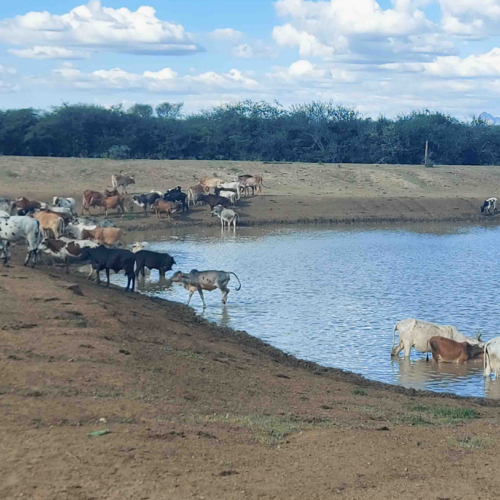
This briefing paper provides an overview of pastoralist livestock marketing in Africa. It also explains the marketing behaviors of pastoralists and the economic logic behind their decisions on when, how many, and which types of animals to sell.
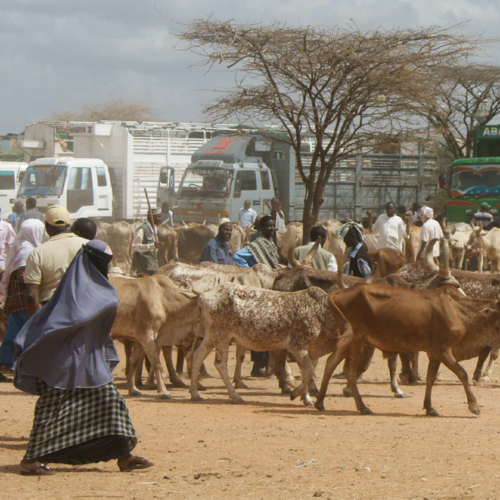
Ce document d’information présente une vue d’ensemble de la commercialisation du bétail pastoral en Afrique. Il explique également les comportements des pasteurs en matière de commercialisation et la logique économique qui sous-tend leurs décisions quant au moment, au nombre et aux types d’animaux à vendre.
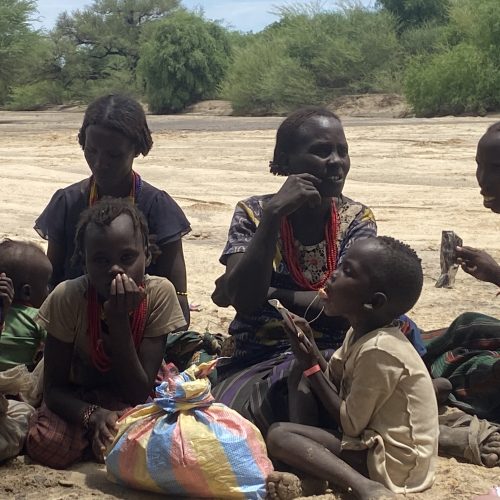
This study share the results of a rapid community-level analysis of the causes of acute malnutrition among the Dasanech in northern Kenya.
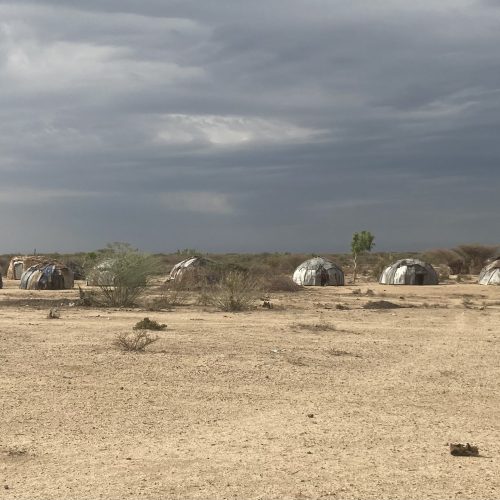
This brief report on how recent livelihoods trends such as the loss of the delta and recent shocks such as the 2022 drought have directly impacted food security and nutrition in Illeret, Kenya.
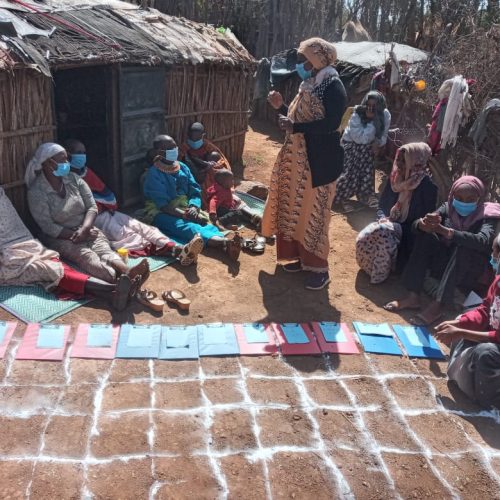
This brief presents the results from the Mount Kulal pilot that investigated the seasonality and basic causes of acute malnutrition in northern Kenya.
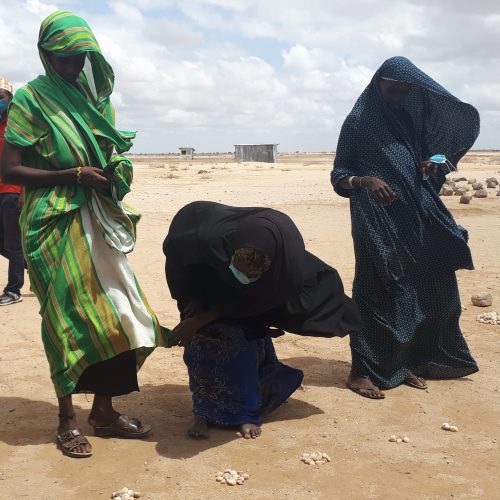
This report describes the methods used and experiences from a community-level analysis of the causes and seasonality malnutrition in selected locations in Marsabit and Isiolo counties in Kenya.
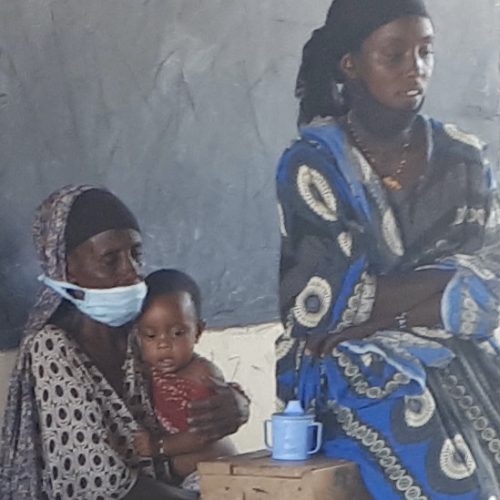
This report presents the results of a participatory analysis of the causes and seasonality of malnutrition in Borana children and mothers in Cherab and Chari wards in Isiolo county, Kenya.
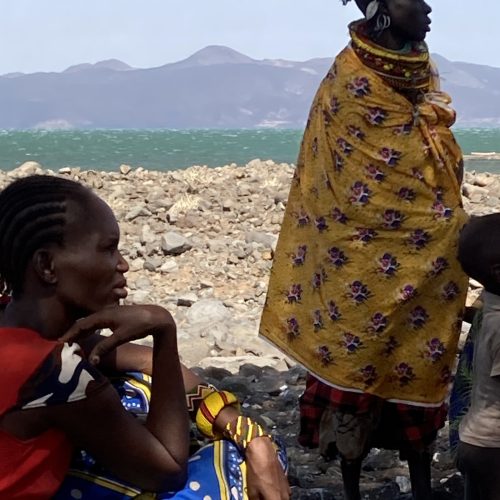
This report presents the results of a participatory analysis of the causes and seasonality of malnutrition in children and mothers in North Horr and Loiyangalani wards in Marsabit county, Kenya.
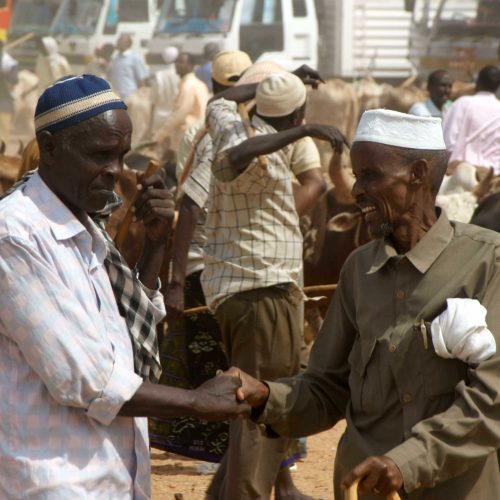
This technical report describes the impacts of coronavirus disease 2019 (COVID-19) restrictions in the Karamoja sub-region of Uganda, based on field assessments in Amudat, Moroto and Abim Districts.
This report describes a participatory analysis of malnutrition in children and mothers in Karamoja, focusing on the seasonality of livelihoods and food availability, and on causes of malnutrition. A key…
In pastoralist and agro-pastoralist households in East Africa, livestock not cash are usually the main financial asset. Animals are sold to buy grain and to meet other domestic needs, and…
This synthesis paper reviews Feinstein’s research and focuses on the increasing socioeconomic differentiation in selected pastoralist areas, and the implications in terms of pathways to resilience.
This briefing paper reviews a full synthesis of Feinstein’s research on pastoralism and focuses on the increasing socioeconomic differentiation in selected pastoralist areas, and the implications in terms of pathways to resilience.
This report describes the process and findings of an evaluation of community-based animal health workers (CAHWs) in Kenya, Ethiopia, and South Sudan. Overall, the researchers find that CAHWs continue to…
The Feinstein International Center has been developing and adapting participatory approaches to measure the impact of livelihoods based interventions since the early nineties. Originally released in 2009, this updated version…
Many countries’ governments are slow to assume leadership of their disaster management system. Reasons for slow assumption of national leadership include a lack of government prioritization of disaster management, minimal…
This report presents the findings of two cohort studies assessing the impact of small-scale livestock interventions, designed to sustain access to and availability of animal milk at the household level over the dry season, on the nutritional status of children under 5 years of age.
Although pastoralists in Ethiopia are often characterized as unresponsive to market opportunities, the bulk of Ethiopia’s growing formal and informal livestock and meat exports are supplied from pastoralist areas of…
This was a follow up study to earlier regional analysis for the IGAD-FAO Livestock Policy Initiative that examined the benefits of livestock exports by pastoralist wealth group. Mind the Gap focuses on the Borana and Somali areas of Ethiopia, and describes the growing formal trade in meat and animals from pastoralist areas, destined for export markets.
The project Revitalizing Agricultural/Pastoral Incomes and New Markets (RAIN) is a three‐year project implemented by Mercy Corps and Save the Children UK (SCUK) in parts of Somali and Oromiya Regions…
The pastoralists of Shinile Zone in the Somali Region of Ethiopia experience multiple livelihoods challenges and various types of conflict. Among international NGOs in the area, there is increasing interest…
Milk Matters ultimately aims to improve the nutritional status of children in pastoralist/semi pastoralist areas in the horn of Africa.
Support to the export of pastoralist livestock from the Horn of Africa is often viewed by aid organizations as a key poverty reduction strategy. Drawing on existing literature and field research in Ethiopia, Kenya and Sudan, this report examines if and how different wealth groups benefit from the export trade.
This report is the outcome of the first phase of Milk Matters: a joint venture between the Feinstein International Center, Save the Children USA and Save the Children UK in…
Children across pastoralist/semi pastoralist areas of the horn of Africa are often referred to as some of the most nutritionally vulnerable in the world. The dominant response from the international…
The Feinstein International Center has been developing and adapting participatory approaches to measure the impact of livelihoods based interventions since the early nineties. Drawing upon this experience, this guide aims…
It is almost two years since the beginning of the rebel insurgency in Darfur, but the conflict continues, the ceasefire has been frequently violated, and the world’s worst humanitarian crisis…
This case study examines how alternative approaches to rinderpest eradication evolved in the complex emergency context of southern Sudan. It also explores how initial experiences informed the establishment of a large scale community based animal health worker (CAHW) system.
This study provides international NGOs with a rudimentary framework for strategic planning in the light of the likely challenges of ambiguity and change awaiting them during the next decade. It…
FEINSTEIN RESEARCH PROJECTS
The Feed the Future Pastoralism in Africa project focuses on developing learning materials for USAID on pastoralism. The primer is accompanied by six briefs that provide more detailed information on specific topics: gender, markets, conflict, land, water, and climate.
USAID Nawiri is an evidence-based development project to address acute malnutrition in northern Kenya. Catholic Relief Services leads a consortium in Isiolo and Marsabit counties, and Feinstein provides research and capacity-building support.
The Karamoja Resilience Support Unit (KRSU) is an initiative of USAID/Uganda aimed at increasing resilience and economic development in the Karamoja Region of Uganda.
From 2005 to 2017, we developed a wide-ranging research portfolio on livelihoods systems under stress throughout the Greater Horn of Africa and beyond. This project synthesizes key themes of that research.
The AKLDP is a five-year project of USAID Ethiopia which provides collaborative learning and coordination support across the Feed the Future portfolio, leading to improved agriculture, livestock and pastoral policy and programming.
The Livestock Emergency Guidelines and Standards (LEGS) have been developed as a set of international standards and guidelines for the assessment, design, implementation, and evaluation of livestock interventions to assist people affected by humanitarian crises.
This project aimed to strengthen policy and practice in selected pastoralist areas of Ethiopia.
This project is a collaboration between Feinstein and Vetwork UK to evaluate community-based animal health worker (CAHW) services in Kenya, Ethiopia, and South Sudan on behalf of the US Office for Foreign Disaster Assistance (OFDA).
This project seeks primarily to clarify some of the underlying causes of the chronically high levels of acute malnutrition found in pastoral regions in Ethiopia, Somalia, and Uganda.
The BRIDGES project aimed to strengthen the capacity of state and non-state actors in the Somali region of Ethiopia to promote peace and stability through the delivery of quality education.
This project expands on initial research on the impacts of livestock commercialization in pastoralist areas of Africa.
The Pastoral Areas Coordination, Analysis and Policy Support (PACAPS) Project took place between July 2007 and March 2010. Through the project we developed a variety of materials, including technical studies, policy briefs, presentations at workshops and meetings, and training materials.
The study on livestock exports and related benefits has helped to raise awareness of processes of commercialization in pastoralist areas, and how this trend contributes to a robust group of commercial actors on the one side, and increasing pastoral destitution on the other.
This project consists of two case studies on large-scale livestock programs in South Sudan and Somalia, focusing on issues of program impacts, coordination, and community participation.
This project supported community-based animal health worker (CAHW) systems in pastoralist areas, and contributed to the final eradication of rinderpest under the Pan African Program for the Control of Epizootics.