
Resilience is the ability of an individual, a household, a community or an institution to withstand a shock or setback of some type and recover, or “bounce back,” after a setback. As such, it implies the ability to cope with adversity by adapting, learning and innovating. Resilience has become an important operational concept in chronically vulnerable or food insecure areas of the world. Humanitarian assistance or safety net programs may be able to prevent mortality or reduce malnutrition in the face of shocks or crises, but households, their communities and their institutions may still not fully recover from the effects of the shock. In a recent policy review, the UK Department for International Development (DFID 2011) defines resilience as “the ability of countries, communities and households to manage change, by maintaining or transforming living standards in the face of shocks or stresses—such as earthquakes, drought or violent conflict—without compromising their long-term prospects.”
Resilience and Livelihoods Change in Tigray, Ethiopia
ASSOCIATED PROJECT
SUBJECTS
PUBLICATION TYPE
LOCATION
RELATED PUBLICATIONS
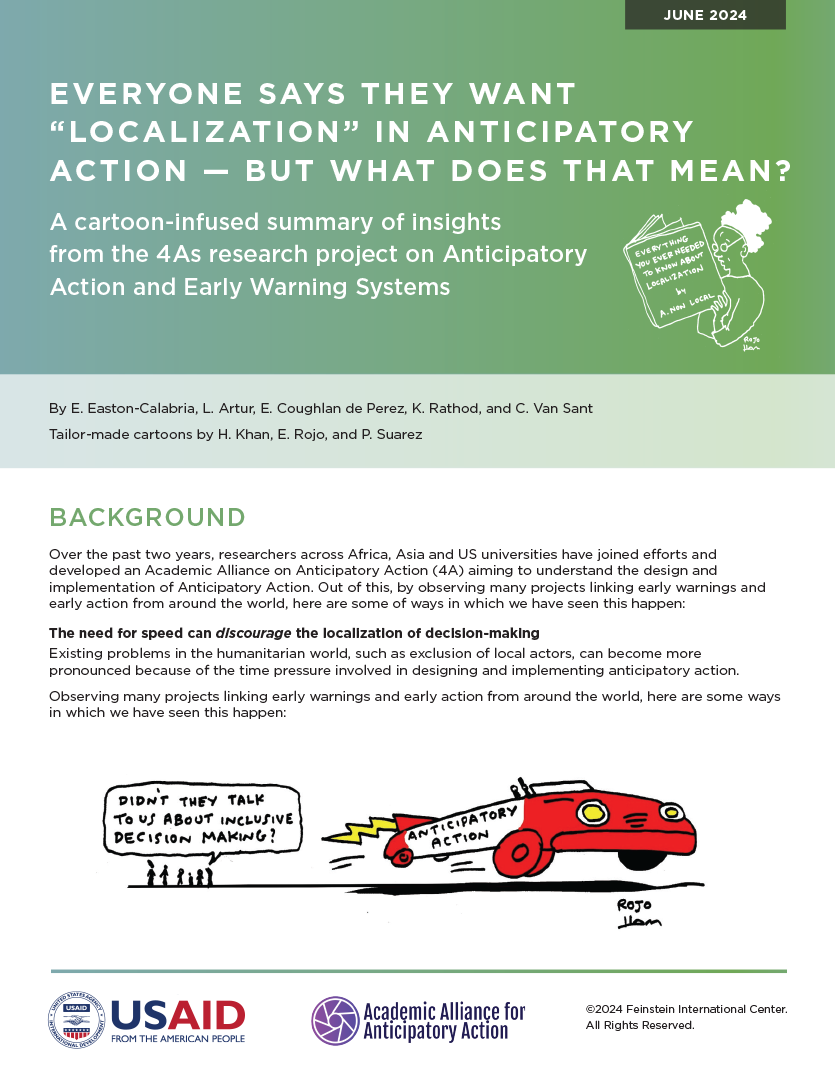
The time pressure involved in designing and implementing anticipatory action can discourage the localization of decision-making. Learn more from a cartoon-infused summary of insights.
•
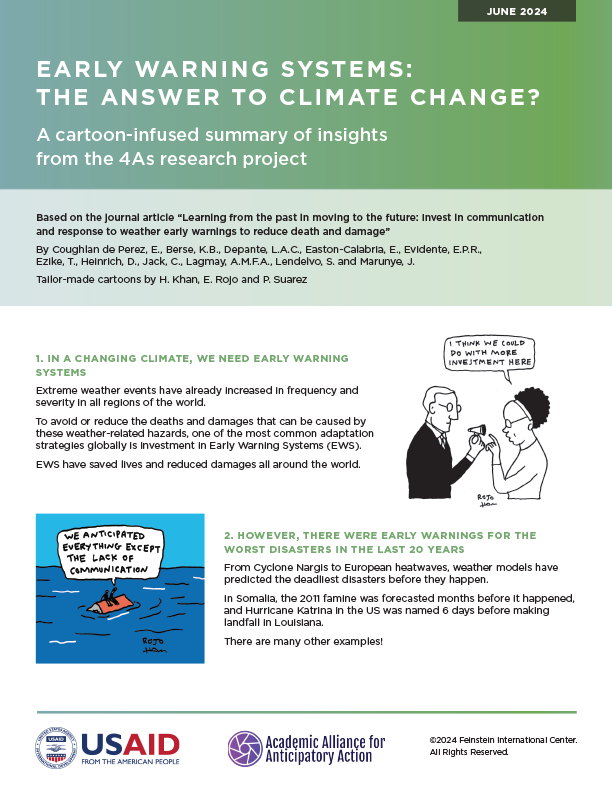
Early Warning Systems can reduce deaths and damages caused by extreme weather events, if investors address gaps in communication and planning. Learn more from a cartoon-infused summary of insights.
•
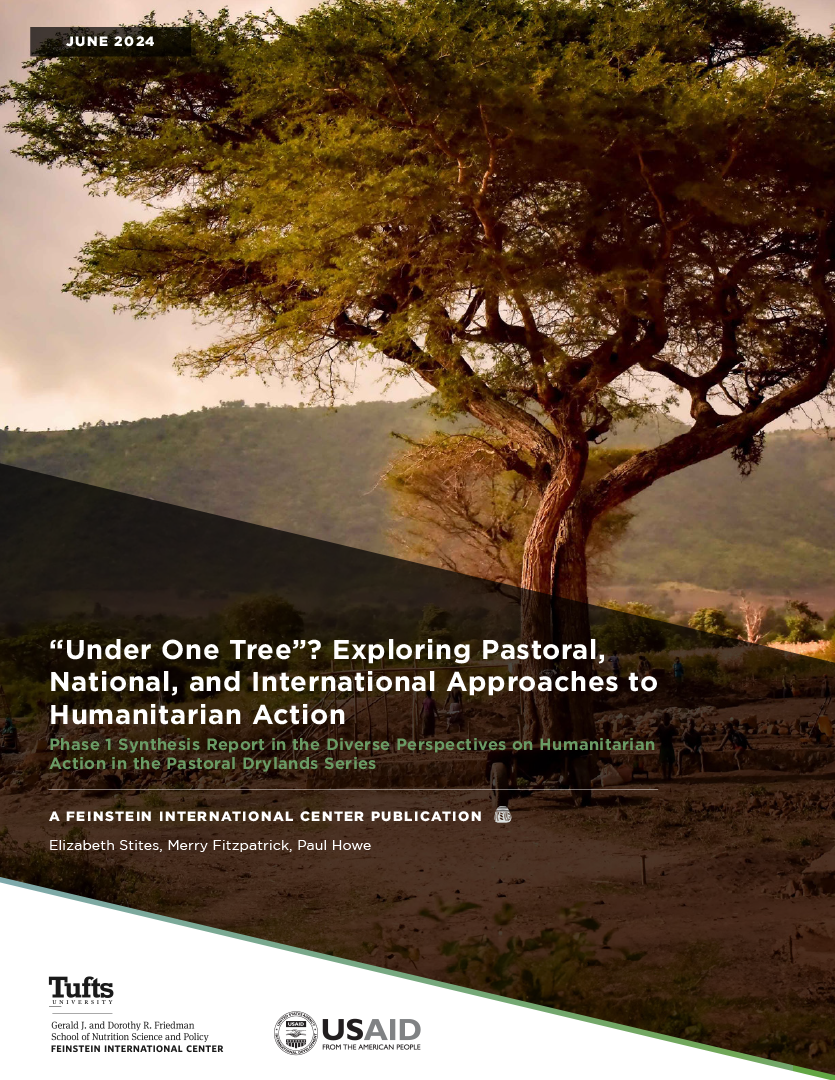
This synthesis report reflects upon Phase 1 findings on humanitarian action in pastoral drylands of the Greater Horn and Sudano-Sahel.
•
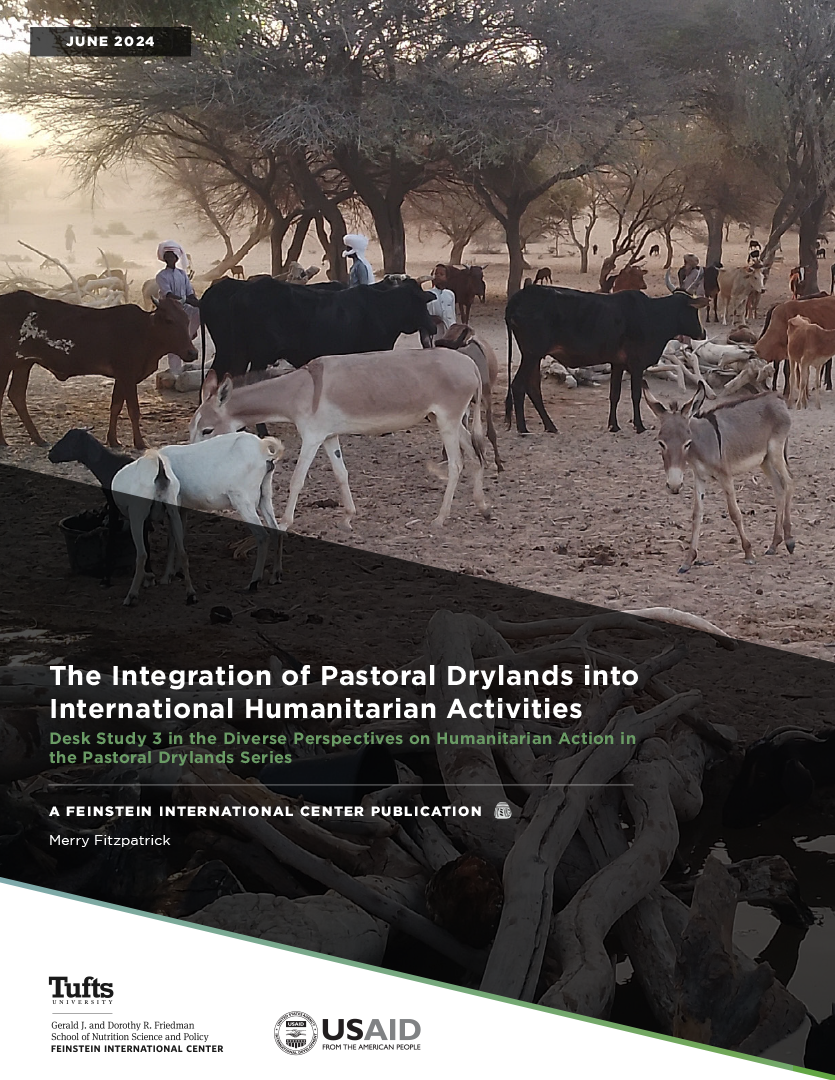
This desk study examines common perceptions of pastoralism among humanitarians and barriers to international humanitarian systems meeting pastoralists’ needs.
•
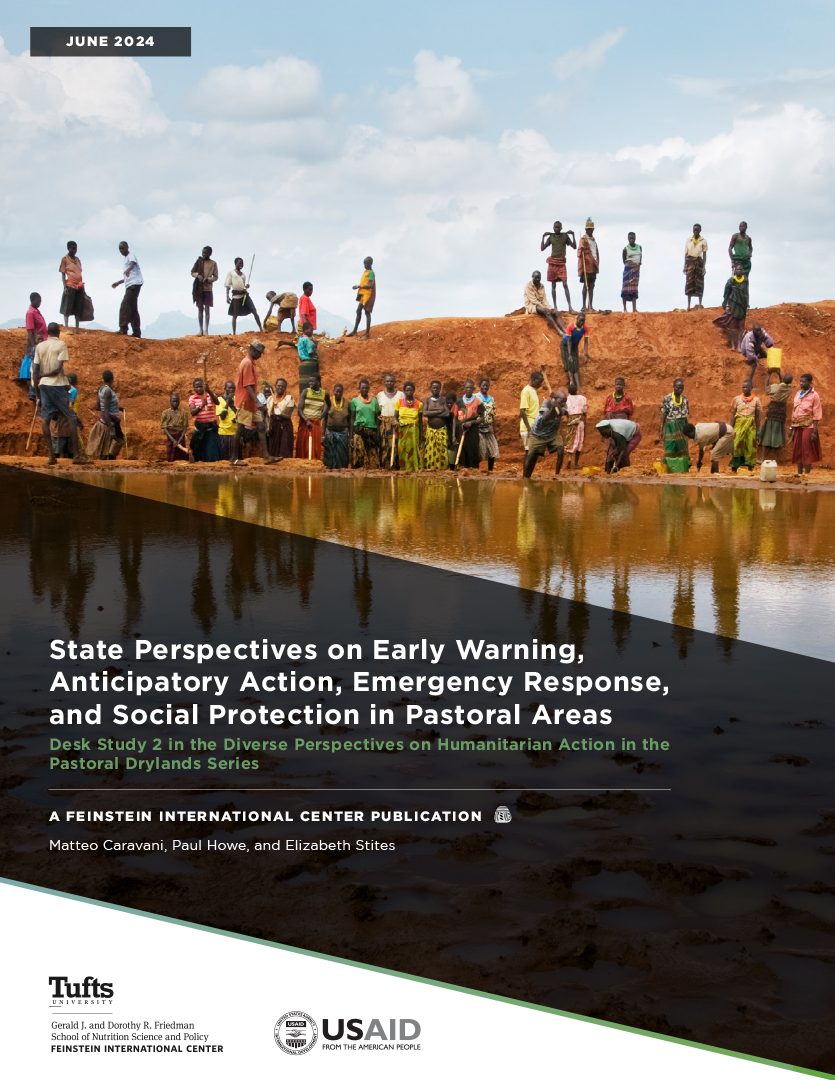
This desk study explores how state-owned policies and programs in pastoral areas of the Sudano-Sahel and the Greater Horn of Africa meet pastoralists’ needs and priorities.
•
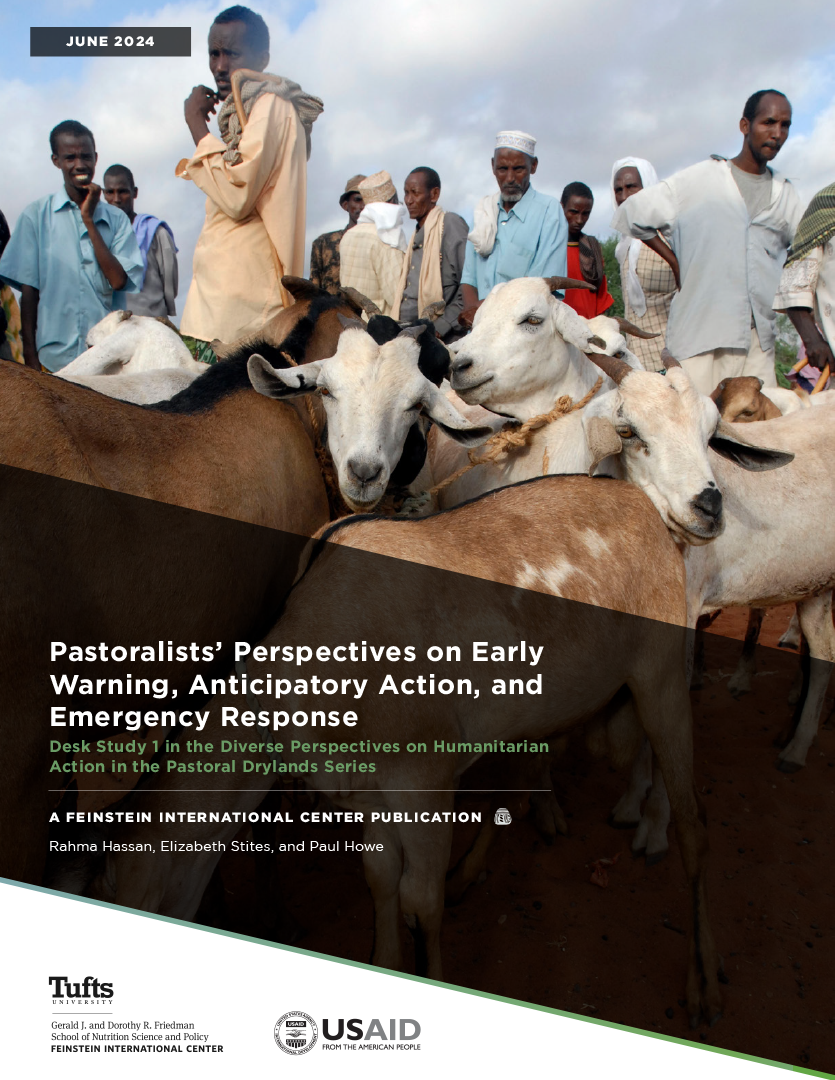
This desk study explores how pastoralists manage climate, conflict, and other stresses through indigenous early warning systems, preventive actions, local emergency responses, and customary safety nets.
•