Erin Coughlan de Perez
Research Director and Associate Professor
CBF Professor
Associate Professor, Friedman School
Contact
Working with Feinstein since 2021
Based in Boston, MA
Dr. Erin Coughlan de Perez is a climate scientist whose work advances climate risk management by integrating science, policy, and practice to better anticipate and mitigate disasters such as droughts, floods, and heatwaves. She spearheaded the rise of Anticipatory Action, pioneering Forecast‑based Financing (FbF) and developing innovative early warning and early action systems that help humanitarian organizations respond proactively to extreme weather events. Her research also examines how climate change adaptation measures can be effectively implemented across diverse global contexts.
Dr. Coughlan de Perez heads several global research initiatives. She directs the Center for Climate and Health glObal Research on Disasters (CORD), a global consortium of seven universities collaborating on climate, health, and Anticipatory Action. Additionally, she leads a NASA-funded project investigating unprecedented extreme weather events in the United States, in partnership with the American Red Cross.
Before joining Tufts University, Dr. Coughlan de Perez was at the Red Cross Red Crescent Climate Centre, where she established a global climate science team and pioneered Forecast-based Financing. She continues to serve as a technical advisor at the Climate Centre, maintaining vital connections to humanitarian operations worldwide.
Dr. Coughlan de Perez earned her PhD from VU University Amsterdam, her MA in Climate and Society from Columbia University, and her BSc in Environmental Science and International Development from McGill University. She was a lead author of the Intergovernmental Panel on Climate Change (IPCC) 6th Assessment Report. Additionally, she serves as an academic editor for the journal PLOS Climate and serves on the Climate Science Advisory Panel for the state of Massachusetts.
RESEARCH INTERESTS
- Disaster risk management
- Climate change adaptation
- Forecast-based Financing
REGIONAL FOCUS
COURSES TAUGHT
- NUTR 256 Climate Change: Risk and Adaptation for Food Systems and Beyond
MOST CITED BOOKS & ARTICLES
- De Perez, E. C., Van Den Hurk, B., Van Aalst, M. K., Jongman, B., Klose, T., & Suarez, P. (2015). Forecast-based financing: an approach for catalyzing humanitarian action based on extreme weather and climate forecasts. Natural Hazards and Earth System Sciences, 15(4), 895–904. https://doi.org/10.5194/nhess-15-895-2015
- De Perez, E. C., Van Den Hurk, B., Van Aalst, M. K., Amuron, I., Bamanya, D., Hauser, T., Jongma, B., Lopez, A., Mason, S., De Suarez, J. M., Pappenberger, F., Rueth, A., Stephens, E., Suarez, P., Wagemaker, J., & Zsoter, E. (2016). Action-based flood forecasting for triggering humanitarian action. Hydrology and Earth System Sciences, 20(9), 3549–3560. https://doi.org/10.5194/hess-20-3549-2016
- Gros, C., Bailey, M., Schwager, S., Hassan, A., Zingg, R., Uddin, M. M., Shahjahan, M., Islam, H., Lux, S., Jaime, C., & De Perez, E. C. (2019). Household-level effects of providing forecast-based cash in anticipation of extreme weather events: Quasi-experimental evidence from humanitarian interventions in the 2017 floods in Bangladesh. International Journal of Disaster Risk Reduction, 41, 101275. https://doi.org/10.1016/j.ijdrr.2019.101275
- Reckien, D., Magnan, A. K., Singh, C., Lukas-Sithole, M., Orlove, B., Schipper, E. L. F., & De Perez, E. C. (2023). Navigating the continuum between adaptation and maladaptation. Nature Climate Change, 13(9), 907–918. https://doi.org/10.1038/s41558-023-01774-6
- De Perez, E. C., Van Aalst, M., Choularton, R., Van Den Hurk, B., Mason, S., Nissan, H., & Schwager, S. (2019). From rain to famine: assessing the utility of rainfall observations and seasonal forecasts to anticipate food insecurity in East Africa. Food Security, 11(1), 57–68. https://doi.org/10.1007/s12571-018-00885-9
MOST RECENT EXTERNAL PUBLICATIONS
- Kelder, T., Heinrich, D., Klok, L., Thompson, V., Goulart, H. M. D., Hawkins, E., Slater, L. J., Suarez-Gutierrez, L., Wilby, R. L., De Perez, E. C., Stephens, E. M., Burt, S., Van Den Hurk, B., De Vries, H., Van Der Wiel, K., Schipper, E. L. F., Baéz, A. C., Van Bueren, E., & Fischer, E. M. (2025). How to stop being surprised by unprecedented weather. Nature Communications, 16(1). https://doi.org/10.1038/s41467-025-57450-0
- Masukwedza, G. I. T., Clark, J., Jaffe, A., Jeffries, I., Tietjen, B., & De Perez, E. C. (2025). Storylines of unprecedented extremes in the Southeast United States. Bulletin of the American Meteorological Society. https://doi.org/10.1175/bams-d-23-0297.1
- Mojaki, R. A., Marake, M. V., Easton-Calabria, E., Marunye, J. R., & De Perez, E. C. (2024). Socio-economic assessment of drought impacts in Lesotho: implications for early action. International Journal of Climate Change Strategies and Management. https://doi.org/10.1108/ijccsm-12-2023-0150
- Weiss, S., & De Perez, E. C. (2024). An analysis of observed and predicted extreme heat and precipitation trends across four pulse producing regions in North America: North Dakota, Montana, Saskatchewan, and Northeastern United States. Environmental Research: Food Systems. https://doi.org/10.1088/2976-601x/ad8bc7
- Popat, M., Rathod, K., Artur, L., De Perez, E. C., Sharma, A., Beca, N., & Van Sant, C. (2024). Anticipatory actions: lessons from the storm Ana in Mocuba district, Mozambique. Journal of International Humanitarian Action, 9(1). https://doi.org/10.1186/s41018-024-00162-9
NEWS STORIES
Tackling the health impacts of climate change isn’t for the medical and public health fields alone. In a commentary published in The Lancet Planetary Health, a global consortium of researchers…
A new analysis forecasts that rising global temperatures will devastate food crop production in the United States. According to a new study published in Nature, global warming driven by burning…
In January 2022, the Mozambique Red Cross activated its anticipatory action (AA) protocol in response to tropical storm Ana, distributing non-food items to 855 people in the Mocuba district of…
The rising frequency of climate-related disasters, including the recent U.S. hurricanes, raises concerns over how to pay for recoveries, particularly in poorer countries that have contributed the least to climate…
El Niño events have long been linked to low rainfall in Southern Africa, with seasonal rainfall forecasts now included in agricultural advisories for farmers. Although the connection between El Niño…
Populations affected by armed conflict are often exposed to and severely impacted by climate-related disasters. To adequately protect these populations, early warning and early action (EWEA) services need to adapt…
On January 12, 2024, Massachusetts launched a Climate Science Advisory Panel to provide expertise on statewide climate science and future projections. The panel will advise the new Massachusetts Office of…
As global studies of climate change depict increasingly dire outcomes of extreme heat, there is an urgent need to understand the appropriateness of heatwave definitions and temperature datasets in different…
A new report commissioned by the Board for International Food and Agricultural Development (BIFAD) proposes targets and recommendations for USAID to effectively implement its ambitious Climate Strategy in agrifood system…
As the global focus on adaptation to climate change intensifies, it becomes crucial to ensure that these efforts are effective and avoid unintended negative consequences. The first global stocktake of…
Scientists with the Famine Early Warning Systems Network (FEWS NET), including Erin Coughlan de Perez and Daniel Maxwell, have developed new advances in the predictability of East African rains that…
Erin Coughlan de Perez and colleagues published their article “Potential for surprising heat and drought events in wheat-producing regions of USA and China” in the journal npj Climate and Atmospheric…
The Anticipation Hub’s 10th Global Dialogue Platform took place in Berlin and online from December 6 – 8, 2022. The Academic Alliance for Anticipatory Action (4As) partners led a number…
Erin Coughlan de Perez was elected to the 2023 American Meteorological Society (AMS) Council. The Council is the principal governing body of the Society. The AMS is a global community…
Erin Coughlan de Perez is unlikely to end up in the same room or field assignment as Liza Khan, Program Head with SHIFA Welfare Association, a local NGO based in…
The Board for International Food and Agricultural Development (BIFAD) and the U.S. Agency for International Development (USAID) launched the Subcommittee on Systemic Solutions for Climate Change Adaptation and Mitigation in…
Erin Coughlan de Perez is a lead author of an installment in the sixth report by the United Nation’s Intergovernmental Panel on Climate Change (IPCC), which was released on February…
Erin Coughlan de Perez recently published two articles in academic journals. In Disasters, she teamed up with colleagues to publish an article on the effectiveness of anticipatory support for herders…
On January 20, 2022, Maggie Schmitz, the acting division chief for private sector engagement, diaspora, and innovation in USAID’s Bureau of Humanitarian Assistance joined Federal Drive with Tom Temin. In…
On December 8, 2021, USAID announced a new partnership with seven universities around the world, including the Feinstein International Center at Tufts University. This alliance will build the evidence base…
On December 7, 2021, Erin Coughlan de Perez and Dr. Selma Lendelvo from the University of Namibia gave the keynote speech at the Anticipation Hub’s Global Dialogue Platform on Anticipatory…
Erin Coughlan de Perez presented at the first-ever Analysis and Evidence Week, hosted by the the Analysis and Evidence team at the International Committee of the Red Cross from November…
In November 2021, Nature Climate Change Journal published an article that groundbreaking collaboration with more than 100 people, to answer the question globally: Are humans adapting to climate change? Lea…
Erin Coughlan de Perez brought together several people who work in epidemiological and meteorological forecasting to reflect on how these two communities can learn from one another when it comes…
Erin Coughlan de Perez participated in several events relating to climate change in the months of June and July 2021: Erin moderated a United Nations Economic and Social Council Humanitarian…
Erin Coughlan de Perez co-authored a correspondence, which was featured by the International Union Against Tuberculosis and Lung Disease. This piece urges the international Tuberculosis community to consider the various…
Erin Coughlan de Perez presented on the use of “AI for Disasters” at the Mozilla Festival, covering both the opportunities for the use of AI in forecasting disasters as well as…
Erin Coughlan de Perez co-authored two pieces on important environmental research. The first article she co-authored suggests a new way of defining El Nino. This major climate oscillation affects rainfall…
Erin Coughlan de Perez was quoted in an article in The New York Times, which discussed a new board game called “Climate Change” designed by Matt Lealock. This game involves…
The Feinstein International Center and the Red Cross Red Crescent Climate Centre are pleased to announce the appointment of Dr. Erin Coughlan de Perez as Associate Professor and inaugural recipient…
FEINSTEIN PUBLICATIONS
Hazard-focused anticipatory action (AA) plans that focus on drought often seek to mitigate or avoid negative impacts to nutrition and food security. The most recommended approach for AA for malnutrition is…
Waterborne disease anticipatory action (AA) plans focus entirely on reducing health impacts and rely heavily on surveillance systems. Globally, government agencies have developed elaborate surveillance and control measures to combat…
Predictive modelling, surveillance and risk mapping, early warning systems, and anticipatory action (AA) such as pre-positioned resources are all important means for preventing vector-borne diseases. The vector-borne diseases identified as…
The human health impact of storms and flooding occur during and after these weather events and include risks of injury or death as well as waterborne disease. The most common…
Extreme heat is one of the fastest-growing hazards globally. Anticipatory action (AA) is one way to reduce the negative health impacts of heatwaves alongside other adaptive strategies to reduce the…
This report provides a global review of anticipatory action frameworks and offers a typology of approaches to AA for different national contexts and health outcomes.
This report outlines an anticipatory insurance product designed to support farmers in the drought-prone regions of Malawi and Zambia.
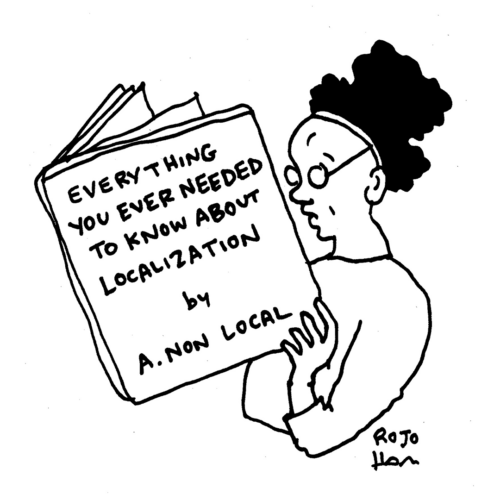
The time pressure involved in designing and implementing anticipatory action can discourage the localization of decision-making. Learn more from a cartoon-infused summary of insights.
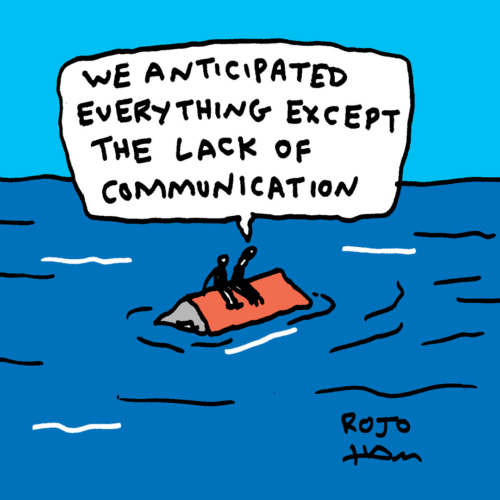
Early Warning Systems can reduce deaths and damages caused by extreme weather events, if investors address gaps in communication and planning. Learn more from a cartoon-infused summary of insights.
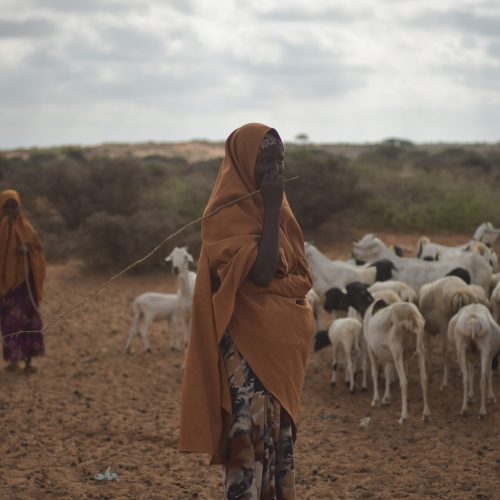
This anticipatory action landscape brief summarizes what has been published on anticipatory action since 2020 and what progress has been made on existing recommendations.

This brief examines Lesotho, a small country in southern Africa that is highly vulnerable to climate hazards, is equipped to make use of DRF.
FEINSTEIN RESEARCH PROJECTS
The CORD consortium works to protect health and build resilience in climate-related disasters. We collect and analyze data on the health effects of climate-related disasters, illuminating how vulnerable populations are affected around the world.
This study of 4 U.S. locations will document how refugee and migrant populations in the United States receive, understand, and act on early warnings and information related to weather hazards.
This project reconsiders our understanding of famines, the dynamics that give rise to famines, the resilience of populations subjected to these dynamics, and the means of prevention at the disposal of governments, humanitarian agencies, donors, and the affected populations.
The Academic Alliance for Anticipatory Action (4As) is a global consortium of universities supported by USAID that is building the evidence base on why acting ahead of hazards and risks saves lives.