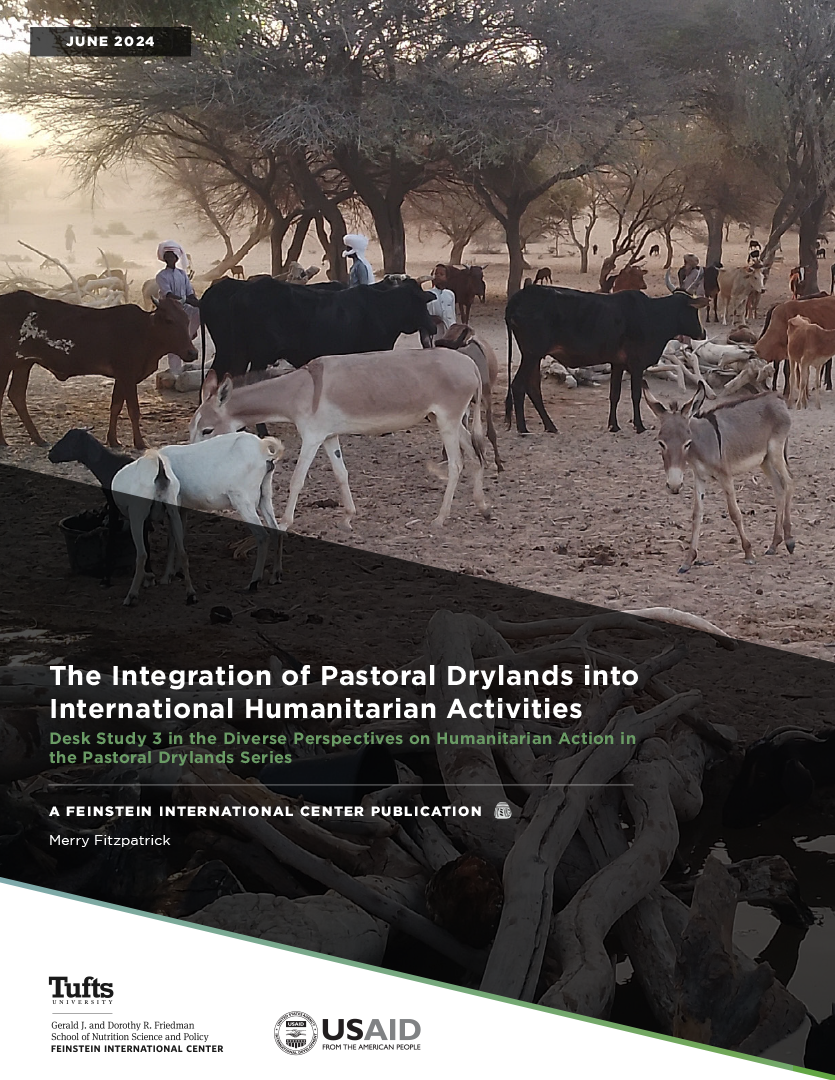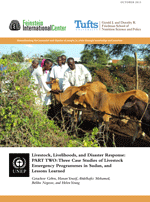
Tufts University and the Feinstein International Center are pleased to announce the publication of a two part review of emergency livestock interventions in Sudan. Livestock production is a crucial livelihood strategy for farmers and pastoralists throughout Sudan, and contributes to a wider economy linked with livestock marketing, livestock products, fodder, water and support services. In Sudan there is a long experience of livestock interventions that predates the development of the international “Livestock Emergency Guidelines and Standards”, including for example provision of veterinary services (vaccination, training of CAHWs), animal fodder, restocking and destocking livestock, etc. Given this wide-ranging history and experience, this study reviewed recent emergency livestock interventions and the introduction of the Livestock Emergency Guidelines and Standards to Sudan.
This study was funded by UKAID under their support to UNEP’s Sudan Integrated Environment Programme.
To read PART ONE: A Review of Livestock Based Livelihood Projects in Sudan please click here.