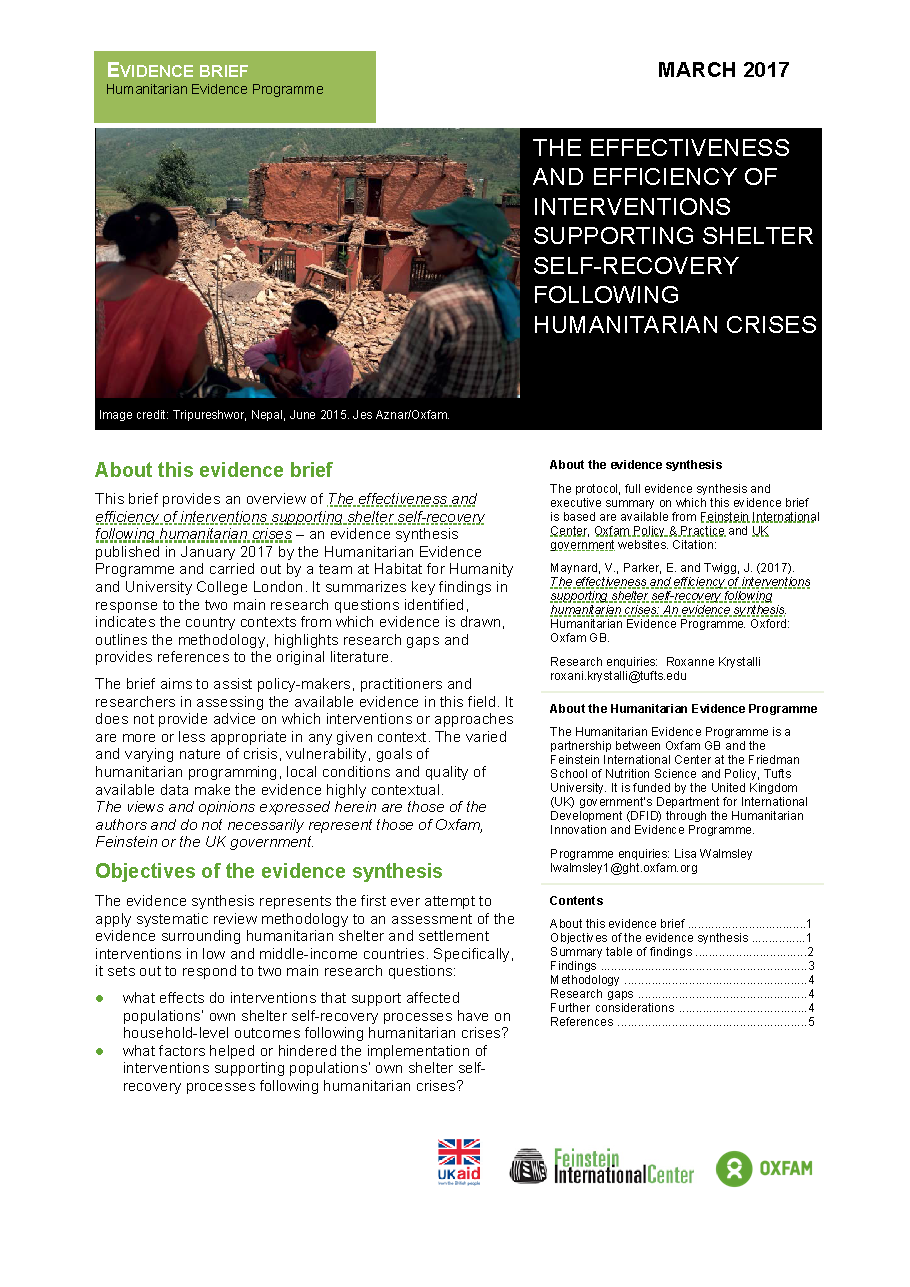
This is an evidence brief, accompanying the full systematic review on shelter self-recovery in humanitarian settings.
Shelter is critical to the survival of people affected by humanitarian crises as it provides safety and security, protection from the climate and resistance to ill health and disease. Having somewhere safe, secure and healthy to live, with access to livelihood opportunities, healthcare and education is also fundamental to sustaining family and community life during post-crisis recovery and reconstruction or displacement, return and resettlement. But what effects do humanitarian interventions that support affected populations’ own shelter self-recovery processes have on household-level outcomes following a crisis? And what factors have helped or hindered the implementation of such interventions? This evidence synthesis represents the first ever attempt to systematically review the existing evidence for an answer.
- This briefing paper accompanies a stand-alone executive summary and the full systematic review. It forms part of a series of humanitarian evidence syntheses and systematic reviews commissioned by the Humanitarian Evidence Program.