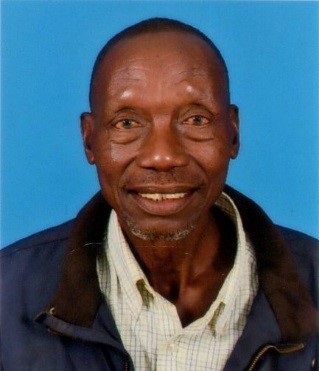
Darlington Akabwai conducts research and is responsible for research operations for Feinstein projects in Uganda and South Sudan, with an emphasis on Karamoja. He works closely with governments and local communities to ensure that research projects are carried out effectively and respectfully. Having worked on community-based programs with pastoralist communities in Africa for more than 25 years, Darlington is an expert on indigenous knowledge and culture. His training as a veterinarian and his reputation as a peacemaker affords him great respect throughout the region. Officials within the African Union’s Conflict Management Unit consider him to be one of the most respected and successful peacemakers in Uganda, Kenya, and Sudan, and they regularly call on his expertise.
Prior to joining Feinstein, Darlington pioneered community-based approaches to livestock care in East Africa and was instrumental in establishing programs that controlled rinderpest in Ethiopia, Sudan, Uganda, and Kenya. With the African Union, Darlington developed one of the cornerstones of its work: pastoral conflict resolution and management, including working with local women to bring peace to the area with “Women’s Peace Crusades.”
He holds a degree in veterinary medicine from the University of Nairobi.
Darlington’s dog, Rex, is his great friend who never stops barking.
RESEARCH INTERESTS
- Livelihoods and human security
- The Seer people in pastoral areas of eastern Africa
- Urban migration of pastoralists ending their practice of pastoralism
REGIONAL FOCUS
- Uganda
- South Sudan
COURSES TAUGHT
MOST CITED BOOKS & ARTICLES
MOST RECENT EXTERNAL PUBLICATIONS
- Stites, Elizabeth and Darlington M. O. Akabwai. “’We are now reduced to women’: Impacts of forced disarmament in Karamoja, Uganda.” Nomadic Peoples 14 no. 2 (2010).
- Darlington M. O. Akabwai. “The Social Transformation of Pastoralist Conflicts and Cattle Rustling in Eastern Africa: The AK-47 Factor.” Institute for Security Studies. 2009.
- Darlington M. O. Akabwai. “Extension and Livestock Development: Experience From among the Turkana Pastoralists of Kenya.” Overseas Development Institute. 1992.
NEWS STORIES
In November 2021, Pastoralism released with a special section of articles coming out of the Karamoja Resilience Support Unit’s 2019 conference “Pathways to Resilience in the Karamoja Cluster.” It includes…
On December 1, Feinstein researchers published an article in Third World Thematics. The article, “Disability and recovery from war in northern Uganda,” explores the prevalence and impact of disabilities resulting from…
FEINSTEIN PUBLICATIONS
This study examines how anticipatory action was perceived and experienced among Ethiopians living with drought alongside other crises.
This fifth year report examines key areas of change in Karamoja over the past five years to inform development programming decisions.
This report presents a series of challenges to conventional thinking around livelihood recovery for war-affected populations.
This is an evidence brief, accompanying the full systematic review on urban identification practices in humanitarian emergencies.
This systematic review represents the first ever attempt to systematically search, sort and synthesize the existing evidence in order to consolidate findings on the tools, methods and metrics used to identify and prioritize vulnerable people, households and communities, including those displaced within and to urban areas.
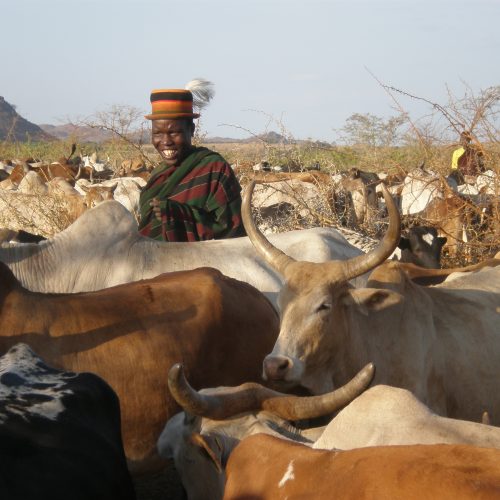
Through a case study in Uganda’s second largest town, Lira, the research sets out to examine what the dynamics of young people’s work look like.
Through a case study of one recently redeveloped marketplace in northern Uganda, this study sets out to shed some light on what happens when attempts to modernize and formalize economic activity come into contact with the local realities of how trading, power and politics actually work
This report reviews the state of animal-based livelihoods in the Karamoja region of northeastern Uganda and examines how animal ownership affects a household’s ability to weather shocks.
This protocol details the methodology for an evidence synthesis on urban humanitarian action. The evidence synthesis asks, “What are the practices to identify and prioritize populations affected by urban humanitarian…
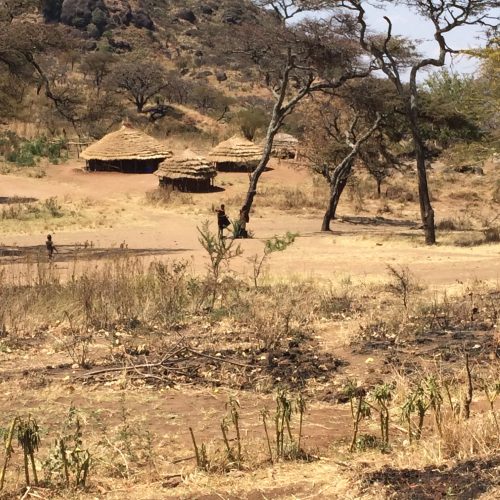
This study provides a nuanced understanding of the transformation of violence for women, men, girls and boys in northern Karamoja at the household, community, district and the regional levels. Drivers of…
Much of the literature on urbanization focuses on migration to large cities. In contrast, this report traces the process, challenges, and opportunities of rural-urban migration to towns and small cities…
This report presents new data on insecurity and changing livelihoods from the perspective of male youth in southern Karamoja, Uganda, and includes an evaluation of a pilot communication and relationship…
In 2012/13, the Secure Livelihoods Research Consortium (SLRC) implemented the first round of an original sub-regional panel survey in northern Uganda aimed to produce data on livelihoods, access to and…
In 2012/13, SLRC implemented the first round of an original sub-regional panel survey in Uganda aimed to produce data on livelihoods, access to and experience of basic services, exposure to…
This report documents the findings of a livelihoods assessment carried out as part of the USAID funded Growth, Health and Governance program being implemented by Mercy Corps and partners in…
This study examines the evolution of customary authority among four population groups: the Jie, Dodoth, Matheniko, and Tepeth
This is a summary of a larger report, funded by Irish Aid Kampala, that examines the evolution of customary authority among four population groups: the Jie, Dodoth, Matheniko, and Tepeth.
Migration from rural Karamoja to towns, cities and other rural areas has long been part of local livelihood strategies, but attention to this phenomenon by national and international actors in…
This report presents the findings of research examining the intersection between natural resources and conflict in southern Karamoja, Uganda, from the perspective of local communities. The study and report are…
This report is the result of the first phase of a partnership with Save the Children in Uganda. Based on field work conducted in April 2009 in Moroto and Kotido…
Karamoja is the poorest and least developed region of Uganda. The population experiences chronic food insecurity, little access to basic services, the weakening of traditional livelihood systems, ongoing insecurity, human…
This new report on the Karamoja Cluster of Uganda, Sudan, Kenya, and Ethiopia is the result of several years of field work by a respected Teso elder from the region…
As part of a larger project entitled “Livelihoods and Human Security in Karamoja,” this briefing paper presents findings on causal factors and broad patterns in out-migration among the Bokora population….
FEINSTEIN RESEARCH PROJECTS
Feinstein’s work as part of the Apolou project seeks to understand the impacts over time of a shift to an increasingly cash-based economy on different wealth, livelihood, and demographic groups.
This USAID-funded five year project (2012-2017) aims to improve livelihoods outcomes for the pastoral, agro-pastoral, and agrarian populations in the region.
Feinstein field research throughout the Karamoja region will allow us to document and analyze how seers operate within their own communities and shed light on the complex nature of their relationships with other tribal groups, both friends and enemies.
This project supported community-based animal health worker (CAHW) systems in pastoralist areas, and contributed to the final eradication of rinderpest under the Pan African Program for the Control of Epizootics.