Hazard-focused anticipatory action (AA) plans that focus on drought often seek to mitigate or avoid negative impacts to nutrition and food security. The most recommended approach for AA for malnutrition is…
Waterborne disease anticipatory action (AA) plans focus entirely on reducing health impacts and rely heavily on surveillance systems. Globally, government agencies have developed elaborate surveillance and control measures to combat…
Predictive modelling, surveillance and risk mapping, early warning systems, and anticipatory action (AA) such as pre-positioned resources are all important means for preventing vector-borne diseases. The vector-borne diseases identified as…
The human health impact of storms and flooding occur during and after these weather events and include risks of injury or death as well as waterborne disease. The most common…
Extreme heat is one of the fastest-growing hazards globally. Anticipatory action (AA) is one way to reduce the negative health impacts of heatwaves alongside other adaptive strategies to reduce the…
This report provides a global review of anticipatory action frameworks and offers a typology of approaches to AA for different national contexts and health outcomes.
This case report looks at migration to Costa Rica and explores the main opportunities for and obstacles to integration in terms of migratory status, access to public health, jobs, education, and recreation.

In 2018, the Feinstein International Center undertook a nine-month strategic planning process. This document describes the outcomes of that process, our 2019–2022 Strategic Plan.
We are pleased to provide you the latest Feinstein International Center Annual Report, covering the academic year 2012-13. The report provides summaries of all the current research programs and our…
India is host to refugees from all its neighboring countries, and in addition, in New Delhi, UNHCR assists over 24,000 urban refugees and asylum-seekers originating from Myanmar and non-neighboring countries…
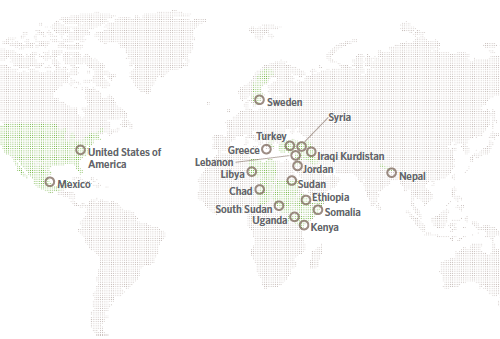
This report covers the first year of our new three year strategy with its focus on seven critical areas of research. We now have active research ongoing in 16 countries…
Since our founding in 1997, the Feinstein International Center has broadened into a multidisciplinary institution focused on providing the understanding, teaching, and evidence needed to drive positive change in policies…
The Center’s scope of work has expanded in 2010–11 while staying focused on the subject matter of marginal communities and crisis. We now have active research ongoing in 14 countries…
The Center’s scope of work has expanded in 2009-10 while staying focused on the subject matter of marginal communities and crisis. We now have active research ongoing in 14 countries…
Gode zone in the Somali National Regional State of Ethiopia is a remote area in the east of the country, characterized by marked under‐development and frequent humanitarian crises. In addition,…
This Practitioners’ Guide to the Future serves as the culmination of the Humanitarian Horizons project, commissioned by the members of the Inter-Agency Working Group and implemented jointly by the Feinstein…