
Revisiting the Evidence on Kwashiorkor Malnutrition
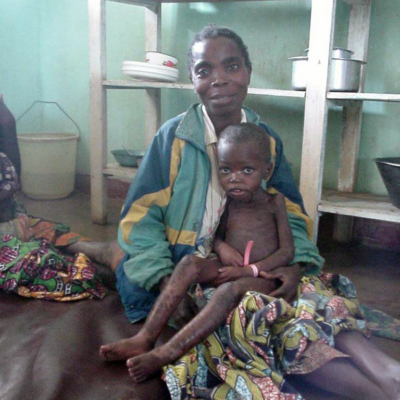
Kwashiorkor malnutrition affects hundreds of thousands of children and kills tens of thousands each year. Although recognized as a unique form of malnutrition since the 1930s, its etiology is still unclear. In 1968, a group of scientists studying and treating kwashiorkor met to discuss differences between kwashiorkor and wasting, leading to the diagnostic criteria currently used in treatment and study designs. Over the past 50 years, we have learned a lot more about the progression of kwashiorkor.
Through a series of webinars in late 2020 and early 2021, current researchers and practitioners review recent evidence related to kwashiorkor. These webinars will lead to another meeting of experts to discuss and advance kwashiorkor prevention, diagnosis, and treatment.
This project is a collaboration between Action Against Hunger UK, the Feinstein International Center, and Wageningen University.
Click the “Webinar Recordings” tab to watch the past webinars. We will share more information about upcoming events in early 2021.
Webinar 1:Revisiting the evidence: Characterizing and treating kwashiorkor
September 29, 2020.
This first webinar discussed recent research relating to treatment, diet, and the biochemical mechanisms associated with kwashiorkor.
Panel:
- Alexandra Rutishauser-Perera, Action Against Hunger UK
- Merry Fitzpatrick, Feinstein International Center, Tufts University
- Gerard Bryan Gonzales, Wageningen University
- Moderator: André Briend, Department of Nutrition, Exercise and Sports, Faculty of Science, University of Copenhagen, Denmark and University of Tampere School of Medicine and Tampere University Hospital, Center for Child Health Research, Finland
Webinar 2: Overt signs of kwashiorkor: Looking at edema and beyond
Monday, October 26, 2020.
Although Kwashiorkor malnutrition is diagnosed by bi-pedal pitting edema, it is characterized by an array of visible signs as well as metabolic disturbances. This event considered recent research and practice related to the visible signs of kwashiorkor, beyond the apparently simple diagnostic, to improve our understanding of the syndrome and its treatment.
Panel:
- Merry Fitzpatrick, Feinstein International Center, Tufts University
- Sofine Heilskov, Aarhus University Hospital
- Kirrily de Polnay, Médecins Sans Frontières
- Regina Keith, University of Westminster
- Moderator: Alexandra Rutishauser-Perera, Action Against Hunger UK
Webinar 3: Metabolic and biochemical characterization of kwashiorkor
November 20, 2020.
Major metabolic pathways and the associated organs are all affected in cases of kwashiorkor. We will review evidence on the major metabolic and biochemical derangements known to occur in kwashiorkor, and discuss potential mechanism driving kwashiorkor aetiology.
Discussants:
- Asha Badaloo, Tropical Metabolism Research Unit, Caribbean Institute for Health Research, University of the West Indies
- Robert Bandsma, The Hospital for Sick Children / University of Toronto
- James A Berkley, University of Oxford / KEMRI-Wellcome Trust
- André Briend, University of Tampere
- Gerard Bryan Gonzales, Wageningen University
- Thaddaeus David May, Baylor College of Medicine
Basic characterization and treatment of kwashiorkor
This is the first of three webinars in the Revisiting the Evidence on Kwashiorkor Malnutrition Webinar Series. Panelists discuss recent research related to treatment, nutrition, and the biochemical mechanisms associated...
Overt signs of kwashiorkor: Looking at edema and beyond
This is the second webinar in a series revisiting the evidence on kwashiorkor malnutrition. In this webinar, panelists discuss the observable signs of kwashiorkor. Alexandra Rutishauser-Perera moderates a discussion with...
Metabolic and Biochemical Characterization of Kwashiorkor
In this third webinar of the series revisiting the evidence on Kwashiorkor Malnutrition, Alexandra Rutishauser-Perera moderates a discussion with Bryan Gonzales, Asha Badaloo, Robert Bandsma, Jay Berkley, André Briend, and...